
Most people with COVID-19 recover at home. Two things decide the rest: recognising the few signs that mean going to hospital, and calling a doctor in the first days if the patient is in a high-risk group — because antiviral medicine only works if it is started early.
Recognising it, and what it is very easily confused with
According to CDC, the symptoms include: fever or chills, cough, difficulty breathing or shortness of breath, sore throat, a blocked or runny nose, loss of taste or smell, tiredness, body aches, headache, nausea or vomiting, and diarrhoea. CDC states plainly that this list is not exhaustive. Symptoms usually appear about 2 to 14 days after exposure, and they can start mild and worsen.
The commonest confusion is with influenza, viral fever and dengue: all of them can open with fever, headache and body aches. No one can tell them apart reliably by observation, so testing is needed. In Vietnam dengue circulates all year round — and that fact changes which fever medicine is chosen.
What to do right away
- Write down the FIRST DAY of symptoms — that date decides whether today is still inside the window for antiviral medicine, and it is very often misremembered.
- If the patient is in one of the high-risk groups listed below: contact a doctor now, do not wait to see whether it gets worse.
- Watch the breathing — that is what deteriorates first: whether they have to break off for breath mid-sentence, whether they have to sit up to breathe more easily.
- Let them rest and drink regularly; test so you know which illness it actually is.
- Stay at home and apart from others while symptoms last; open up for fresh air; wear a mask when you have to share a space.
Fever and pain relief — and the part to ask about first
According to CDC, most mild cases recover at home and can use over-the-counter medicines such as paracetamol (acetaminophen) or ibuprofen for comfort; the dose is for a doctor or pharmacist to decide. But if dengue has not been ruled out, ask a doctor or pharmacist before using ibuprofen or aspirin: in dengue that group raises the risk of bleeding.
Things NOT to do
- Do NOT buy antiviral medicine on someone's recommendation. It is prescription-only: the doctor needs to know what else you are taking and the state of your liver and kidneys.
- Do NOT take antibiotics on your own — this is a viral illness, and antibiotics do nothing against it.
- Do NOT use corticosteroid medicines at home on your own; those have to be prescribed by a doctor.
- Do NOT treat steam inhalation or supplements as a substitute for watching the breathing and being seen.
- Do NOT let having been vaccinated, or a mild illness last time, become a reason to relax if the patient is in a high-risk group.
Who should see a doctor early, without waiting
According to CDC, the risk of severe illness is higher in: older adults — the highest-risk group; women who are pregnant or recently gave birth; people who are immunocompromised or have had a transplant; people with chronic lung disease, heart disease, cerebrovascular disease, chronic kidney or liver disease, diabetes, cancer, HIV, tuberculosis, dementia or obesity; people who smoke; and people with certain kinds of disability.
For those groups, the thing to do is not to wait and see whether it worsens. According to CDC, antiviral medicine has to be started within the first 5 to 7 days of symptoms to work — and that window usually closes BEFORE the illness has had time to turn severe.
When hospital care is needed
GO TO EMERGENCY CARE or call 115 (the emergency number in Vietnam) NOW if any of CDC's warning signs are present: difficulty breathing, shortness of breath; chest pain or a feeling of pressure that does not go away; new confusion; being unable to wake them or to keep them awake; lips, nail beds or skin that are pale, grey or blue — which looks different depending on skin tone. — BE SEEN WITHIN 24 TO 72 HOURS if: the patient is in one of the high-risk groups above, the sooner the better; the fever will not come down; they were improving and then became badly tired again; they are eating and drinking poorly; or you are not confident about assessing it at home.
| Level | Situation |
|---|---|
| Emergency care now | Any of the signs in the box above |
| Call a doctor today | In a high-risk group and newly diagnosed — to stay inside the medicine window |
| Be seen within 24 to 72 hours | Fever will not come down; improving then badly tired again; drinking poorly |
How long to stay at home, and when to go back to normal
According to CDC, you should stay home and away from others while you have respiratory symptoms that another cause does not explain. CDC sets the point for returning to normal activity by SIGNS rather than by a number of days: when symptoms are improving overall, AND the fever has gone without needing fever medicine. After that it is still worth wearing a mask and keeping the home well ventilated for a while.
The exact number of days, isolation rules and booster schedules differ from place to place and from one period to another, so this article gives no figure: follow the current guidance of the health authority where you are, and ask your doctor about boosters.
When to call a doctor to the house
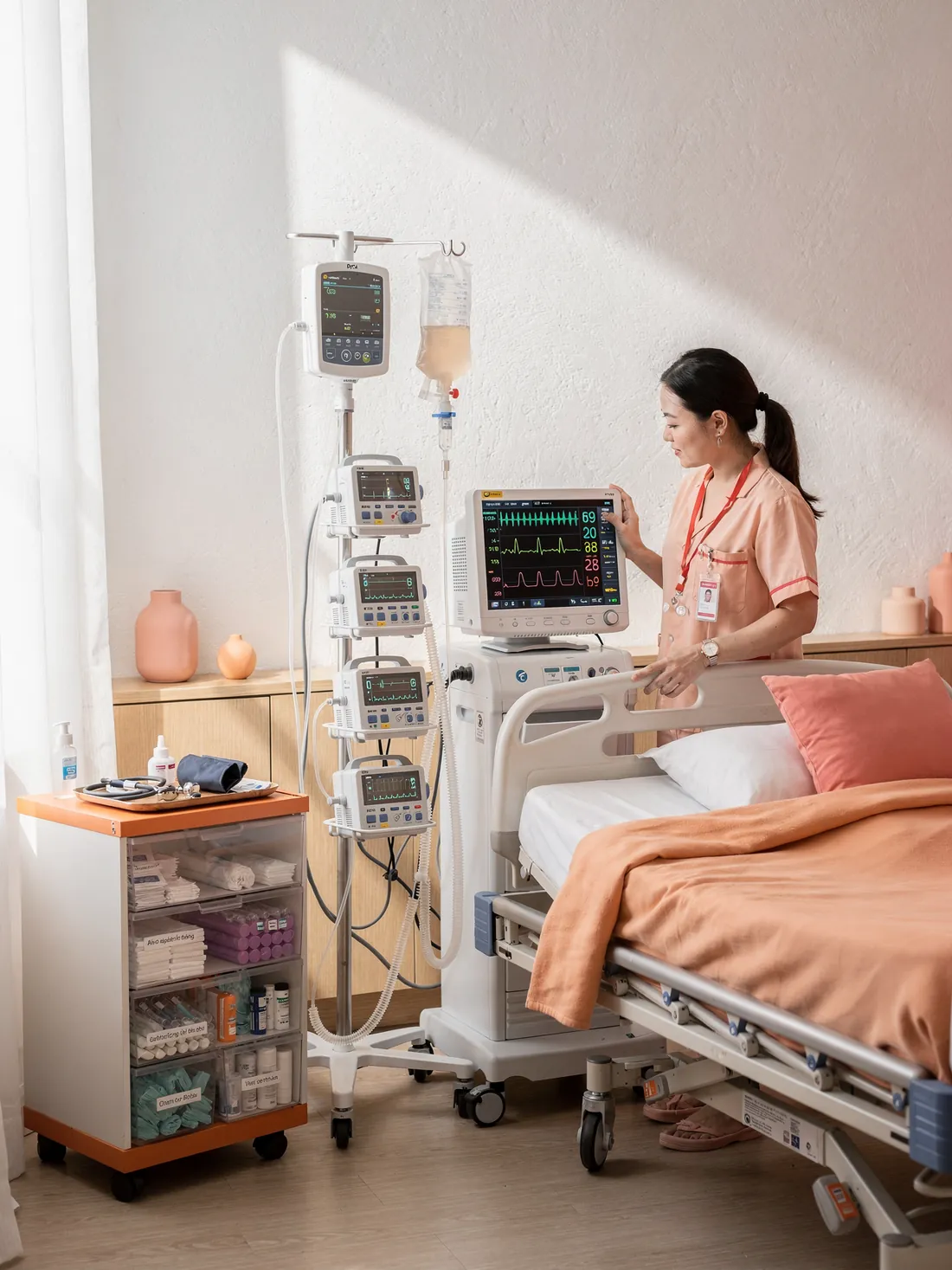
COVID-19 puts families in an awkward position: the patient should stay home to avoid passing it on, yet that is exactly when someone qualified needs to look at the breathing and decide whether hospital is required. A remote consultation answers most of the first-day questions. When vital signs have to be measured at the bedside, GreenCare doctors and nurses come to the house. If any sign in the box above is already present, go in first and call afterwards.
The symptom lists, warning signs, high-risk groups and time windows in this article follow the guidance of the US CDC; this article passes that on and does not replace being examined in person. Citing CDC here does not imply that CDC endorses Y Te Xanh or our services.
Need personalised advice for your loved one? Call our hotline 094 368 81 15 (24/7) — calling to ask a question or to book costs nothing. GreenCare has doctors who come to examine, nurses who carry out doctor's orders (injections, infusions, dressing changes), remote consultation by video call, and a review of the medicines you are taking; an in-depth remote consultation, or any one after the first, is a paid service. For children we take examination and acute care only — not long-term care at home, and not newborns or expectant mothers. We confirm we have staff in your area and provide transparent pricing before we begin.
Sources
- CDC — About COVID-19


