
Care guides
Home health care guides
Practical guides on caring for patients and older adults at home, with pricing and real experience from the Y Tế Xanh nursing team in Da Nang.

Croup in children: the barking cough at midnight, the stridor, and four noisy-breathing conditions people mix up
A child with a barking cough and stridor at midnight: how to recognise croup, how to tell it apart from four look-alikes, what to do now and when to go in.

Morning sickness: it mostly passes on its own, but there is a threshold that means being seen
Morning sickness usually settles before mid-pregnancy. Easing the vomiting at home, why medicines are a doctor's call, and the signs it is no longer ordinary.

Teething in babies: a tooth does not give your child a fever
Teething does not cause fever or diarrhoea. The real signs of teething, how to soothe it safely, and why gum gels and necklaces are the things to avoid.
Nappy rash: what treats it is dry and clean, not more cream
Nappy rash is skin that is damp and rubbed, not skin that is hot. How to recognise it, why talcum powder is out, and the two situations that mean being seen.
Care after birth: the signs that mean you must be seen straight away
After giving birth, what is normal and what is not. The CDC warning signs, how to care for stitches and a caesarean wound, and what not to do.
RSV in children: watch how your child breathes, do not count the coughs
The signs of laboured breathing in a young child with RSV, what can and cannot be done at home, and the point that means calling 115 now.

Neck and shoulder pain: most of it settles, but numb weak hands are another matter
Most neck and shoulder pain settles in a few weeks. But numb weak hands, losing your balance and losing control of urine mean the cord is compressed.

Motion sickness: head it off before you get in, do not wait until you have been sick
Where to sit, where to look, ventilation, what to eat before setting off — and why motion sickness medicine must be taken before departure, not after.
Jet lag: the thing to watch is not the tiredness, but what gets mistaken for jet lag
Tiredness and broken sleep after a long flight usually settle within days. What helps, what to avoid, and the signs that are NOT jet lag.
Bloating and gas: mostly gas in the gut, but one group needs to be seen
Where the gas comes from, how much passing gas is normal, what to do and what not to do at home, and the signs that mean being seen, not a new diet.
Sciatica: the path the pain takes says more than how bad it is
Pain running from the buttock down the leg, with numbness or shocks. Most settles over weeks. But pain in both legs or bladder trouble is an emergency.
Heel pain: most of it settles, but slowly — and the signs that cannot wait
Most heel pain is overload and settles, but slowly. A snap at the moment of injury, a foot out of line, or being unable to walk means being seen now.
Heat rash: recognising it, cooling down at home, and the talcum powder question
Heat rash settles when the person gets cool and dry, not from anything applied. How to recognise it, what to do and avoid, and why sources differ on powder.

Jellyfish stings: the right first aid, and why not to rinse with fresh water
Stung by a jellyfish: why not to rinse with fresh water or apply ice, how to lift tentacles off, and the signs that mean calling an ambulance now.

Constipation: mostly a matter of habit, but one group has to be seen
The measure is you compared with yourself, not a number. What to do and never do at home, the signs that force a visit, and constipation caused by medicines.
Hand tremor: the causes differ sharply in how serious they are — the job is to work out which group you are in
A tremor while the hands are working is not the same as a tremor at rest. How to tell them apart, which causes are reversible, and when to call 115.

Low blood pressure and fainting: what decides it is the circumstance, not the reading
Fainting during exertion, while lying down, or with chest pain needs emergency care. What to do when someone is about to faint, and what must never be done.
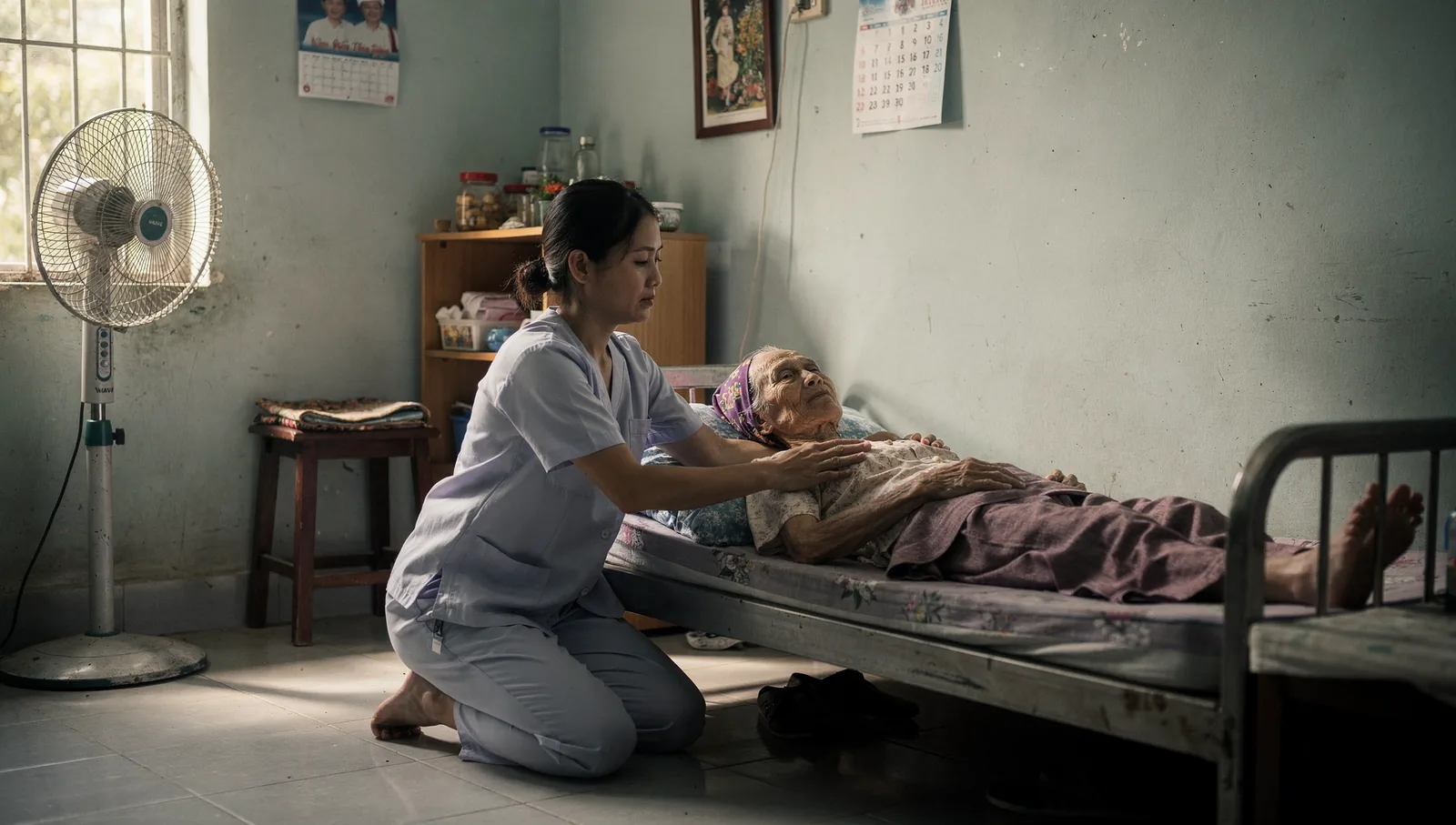
A cough with phlegm: the colour of the phlegm does not decide whether you need antibiotics
Yellow or green phlegm is not grounds for buying antibiotics. What phlegm really tells you, the signs that mean emergency care, and when an X-ray is needed.

Vomiting: read the vomit and the signs with it to know when to go to hospital
What the vomit looks like, what comes with the vomiting, the causes that need emergency care when vomiting comes alone, and when to stop caring for it at home.

A dry cough that will not clear: go looking for the cause, not another cough syrup
A lingering dry cough is a sign that needs a cause. Reflux, asthma and even blood-pressure tablets cause it. The three-week mark, and when to be seen.
Zika: mild for the person infected, dangerous for the baby in the womb
According to CDC, about 80% of people infected with Zika have no symptoms at all, yet the virus can cause microcephaly in a baby. Zika also spreads through sex.

Cat bite: a small wound that runs deep, and why it gets infected more easily than you think
A cat bite leaves a pinprick hole that is deep and seals over. How to wash it, what never to do, the emergency signs, and swollen glands weeks later.
Heat exhaustion: what to do straight away, and when you have to go to a facility
The signs of heat exhaustion, how to cool down and rehydrate at home, the things that must never be done, and the point at which you have to be seen.
Hepatitis A: most people recover, but do not medicate a liver that is inflamed
Hepatitis A spreads through food and drink, mostly resolves and does not become chronic. The signs, why not to medicate yourself, and who must be seen now.
Antibiotics: when they are genuinely needed, and when they do nothing but still do harm
Antibiotics do not kill viruses, so for colds, flu and most sore throats all you get is side effects. Three things never to do, and when the medicine is right.

Whooping cough: in a baby, this illness may not cough at all but stop breathing
According to CDC, many babies with whooping cough do not cough at all but have pauses in breathing. The signs to look for, the adult cough, when to call 115.
Motorbike exhaust burn: cool it at once, put nothing on it, and know when to be seen
An exhaust burn is often treated as minor. How to cool it properly in the first few minutes, why not to apply toothpaste or grease, and when to be seen.

Acute diarrhoea: the dangerous part is dehydration, not how many times you go
Recognising dehydration in adults, young children and older people; what not to do while it lasts; and the signs that mean a medical facility now.
Dog bite: how to wash the wound, and why even a small one has to be seen
Bitten by a dog: how to rinse under soap and water properly, what never to do, the signs that mean emergency care, and why even a tiny scratch is seen today.
Bee and wasp stings: the right first aid, and the signs that mean calling 115
Bee stings: how to get the sting out, what must never be put on the spot, and the signs of anaphylaxis that mean calling 115 instead of waiting to see.
Head injury: the dangerous signs arrive late, so “they seemed fine at the time” is not reassurance
After a bang to the head, danger signs can appear hours later. The signs that mean emergency care, how to watch at home, and why not to keep them awake.
Choking: if they can still cough hard do not intervene, if they go silent give back blows now
Telling choking that still moves air from a complete blockage, how to give back blows and thrusts to an adult and to a baby, and what never to do.
Seizures and epilepsy: put nothing in the mouth — time it instead
Forcing a spoon into the mouth or holding down the limbs both cause harm. The right moves: time it, cushion the head, turn them on their side — and call 115.
Snake bite: the things you must never do, and why hospital has to be now
A tourniquet, cutting the wound, sucking out venom, leaf poultices and ice all make it worse. What to do instead, and why not to wait for swelling.

Diphtheria: the grey membrane in the throat, and why it means emergency care
A sore throat with a grey membrane, a swollen neck and difficulty breathing is not an ordinary sore throat. How to recognise diphtheria and when to call 115.
Alcohol poisoning: do not let them sleep it off, and the signs of drink cut with industrial alcohol
Someone drunk who cannot be roused is an emergency, not asleep. The signs that mean calling 115, what must never be done, and why methanol arrives late.
Heat stroke: confusion and not rousing on a hot day — call 115 and start cooling now
What separates heat stroke from simply feeling unwell in the heat, why cooling must start before the ambulance arrives, and the things that must never be done.
Newborn jaundice: most of it clears by itself, but one group has to be seen today
Most newborn jaundice clears by itself. How to look at the skin colour properly, why not to put the baby in the sun, and the signs that mean being seen now.
Dizziness: mostly harmless, but the “vestibular” label is how a stroke gets missed
Positional dizziness is usually harmless. But sudden dizziness with loss of balance, slurred speech or one-sided weakness is a stroke sign — call 115 now.
Gallstones: silent stones need no treatment, but pain with a fever or jaundice means going now
Most gallstones are silent and need no treatment. How to recognise the pain, why pain with a fever or jaundice means going now, and what not to do at home.
Pulmonary TB: a three-week cough is the point for a chest X-ray, and why you must not stop treatment partway
A cough of three weeks or more is CDC's marker for being seen. Signs of TB, latent infection versus TB disease, and why stopping treatment early is dangerous.

Influenza B is not the mild kind of flu: the severe signs, and who needs seeing early
Influenza B is not milder than A — per CDC it can be just as severe. The signs that mean emergency care, who needs seeing early, and no aspirin for children.
Nosebleed: squeeze the right spot and most stop on their own — and do not tip the head back
Tipping the head back and packing the nose both fail to stop bleeding. How to pinch the right spot, what not to do, and the signs that mean going in now.
Rabies: how to wash a dog or cat bite, and why you must be seen today
Bitten, scratched or licked on broken skin by a dog, cat or bat: how to wash it, why not to wait and watch the animal, and which signs mean calling 115.

Japanese encephalitis: the signs are in the head, not on the thermometer
Over 99% of those infected have no symptoms, but once the virus reaches the brain it is very serious. Fever with confusion, rambling or seizures: go now.
Malaria: what decides the outcome is whether you say where you have just been
A fever after travelling to forest or upland areas, even a year later, can be malaria. Signs easily mistaken for flu, what to do now, what to tell the doctor.
Meningitis: a disease measured in hours, and why you should not wait for all three signs
Fever, severe headache, a stiff neck — but waiting for all three is waiting too long. Small children look quite different, and a purple rash is a late sign.

Back pain: most of it settles, but there are signs you cannot ignore
Most back pain settles. But retention of urine, numbness in the groin and around the anus, and legs getting weaker are emergencies. Red flags, and what to do.
Sore throat: most cases need no antibiotics, and the signs that mean emergency care
Most sore throats are viral, so antibiotics do nothing. Strep throat is different and needs a swab. And some airway signs mean emergency care right now.
Measles: recognising it before the rash, and the call to make before you go in
For its first days measles looks like a bad cold, and spreads before the rash. Early signs, why to phone ahead before going in, and when to go to hospital.
Appendicitis: the pain that moves to the lower right, and why sudden relief is an emergency
The pain moves from around the navel to the lower right and keeps building. Why sudden relief is a dangerous sign, and what not to do before being seen.
Adenovirus: most cases clear up by themselves, but you need to know what to watch for
Adenovirus causes several illnesses: fever with a sore throat, pink eye, pneumonia, diarrhoea in children. Most clear up alone — so what do you watch for?

Acute pancreatitis: pain boring through to the back means hospital, not watching at home
Severe pain above the navel boring through to the back, easier when bent forward: how to recognise it, what never to do, and why this belongs in hospital.
Middle ear infection in children: spotting it before they can talk, and what must never go into the ear
Spotting a middle ear infection in a child too young to tell you, why not every case needs antibiotics, what never goes into an ear, and when to be seen.
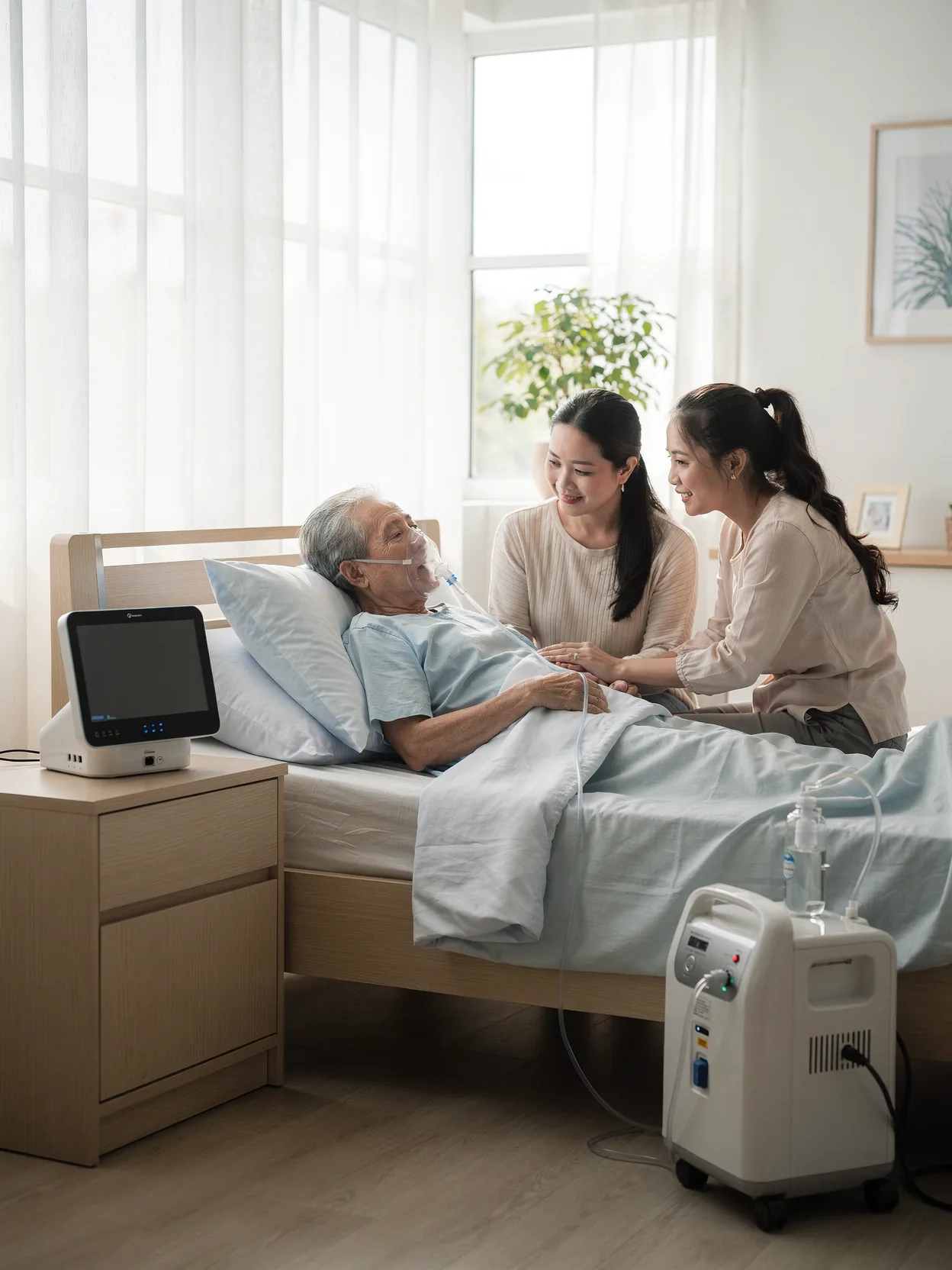
Pneumonia: how to see difficulty breathing at home, and who cannot wait
How to see difficulty breathing without any device, why an older person with pneumonia may have no fever, and the signs that mean emergency care now.
Stroke: face drooping, arm weakness, slurred speech — call 115 now, do not wait to see if it eases
The four stroke signs to remember, why to note the last time the person was definitely normal, and what you must never do while waiting for the ambulance.
Fever with a rash: a name that covers several illnesses, and a test you can do right now
“Fever with a rash” is a catch-all name. The skin-stretch test for the dangerous rash, what a rash before or after the fever means, and when to go in.
Tetanus: which wounds need to be seen, and why a stiff jaw is an emergency
Stepped on a rusty nail, a wound with soil in it, an animal bite: how to wash it, why to be seen the same day, and why a stiff jaw means calling emergency.
Food poisoning: when the whole family is ill, who do you take in first
Several people ate the same meal and all fell ill: who to take in first, who can be watched at home, and the eye and muscle signs that mean emergency care now.
Kidney stones: pain with a fever is an emergency, not a pain to sleep off
Renal colic with a fever or shivering is an emergency, not a pain to sleep off. The signs that mean going now, what to do at home, and what to avoid entirely.
Boils: why you must not squeeze them, and when a doctor needs to drain one
A boil on the face around the nose or upper lip must never be squeezed. Care at home, why a boil full of pus needs a doctor to drain it, and when to go now.
Ringworm: spotting the ring, and why a cream that stops the itch fast makes it worse
A round, itchy patch with a raised, scaly edge: how to recognise ringworm, why a cream containing a steroid spreads it, and when a doctor needs to see it.
COVID-19: the signs that mean hospital, and why high-risk patients should call a doctor early
The COVID-19 signs that mean emergency care, who is high-risk and should see a doctor early, and why antiviral medicine depends on starting in time.

Scabies: how to recognise it, why the whole household is treated at once, and when you need a doctor
Intense night itching between the fingers and wrists: spotting scabies, why everyone at home is treated at once, and why itching persists afterwards.
Hives: how to recognise them, how to settle them at home, and when you must call 115
Raised, itchy weals that move around and fade within hours: how to settle them at home, what never to apply, and the anaphylaxis signs that mean calling 115.
Shingles: recognising it early, why you must be seen straight away, and what not to do
Burning pain in a band down one side, then blisters: recognising shingles, why antiviral medicine has to start early, who you can infect, and when to go in.
"Viral fever": why that label is not enough to put your mind at rest
"Viral fever" is a catch-all label for many viral illnesses, not a diagnosis. What is easily confused with it, when a blood test is needed, when to go in.
Influenza A: the first two days decide, and who needs to see a doctor early
How influenza A differs from a cold, who must see a doctor in the first two days, the signs that mean hospital, and why antivirals need a prescription.
Chickenpox: recognising it, caring for it at home, and when you need a doctor
What chickenpox spots look like, how long it stays contagious, when a child can go back to school, and the signs that mean you need to see a doctor.
Hand, foot and mouth disease in children: recognising it, home care, and the signs that mean hospital now
Recognising hand, foot and mouth disease in children, keeping a child drinking when their mouth hurts, and the neurological signs that mean hospital now.
Dengue: the dangerous phase is when the fever breaks, not when it is at its highest
Dengue often turns severe as the fever breaks, around days 3 to 7. The signs that mean emergency care, what to do at home, and what to avoid completely.
Oral rehydration salts: using them correctly, and the dehydration signs that mean hospital
How to use oral rehydration salts correctly, two dangerous mixing mistakes, and the dehydration signs that mean a medical facility, not fluids at home.
Rove beetle rash: recognising it, washing it properly, and what you must never do
Burning streaks after brushing against a rove beetle: how to wash it, what you must never put on it, telling it from shingles, and when to see a doctor.
Electric shock: cut the power before you touch the person, then call 115
Cut the power before touching someone being shocked, call 115, and why a person who looks fine still has to be checked after an electrical accident.
Taken ill in Nha Trang: public hospital, private clinic, or a doctor to you
Falling ill in Nha Trang: where to start with insurance, public hospital versus private clinic, what a pharmacy can settle, and when a home visit is enough.
Dengue fever in Vietnam: the warning signs, and why the day the fever drops is the dangerous one
Dengue is endemic in Vietnam. What the first days look like, the warning signs that mean hospital now, why the fever falling can mean things are getting worse, and the one painkiller to avoid.
Pharmacies in Vietnam: what you can buy over the counter, and when a pharmacy is not enough
How pharmacies work in Vietnam, what is normally available without a prescription, how to ask for something when the brand name differs, and the signs that mean you need a clinician rather than one more box.
Pharmacies in Hanoi: where to find one, what to ask for, and the two licence classes nobody explains
Where pharmacies cluster in Hanoi and which stay open late, the difference between a nhà thuốc and a quầy thuốc, how to ask for a medicine whose brand name changes here, and what a pharmacy cannot do for you in the winter air.
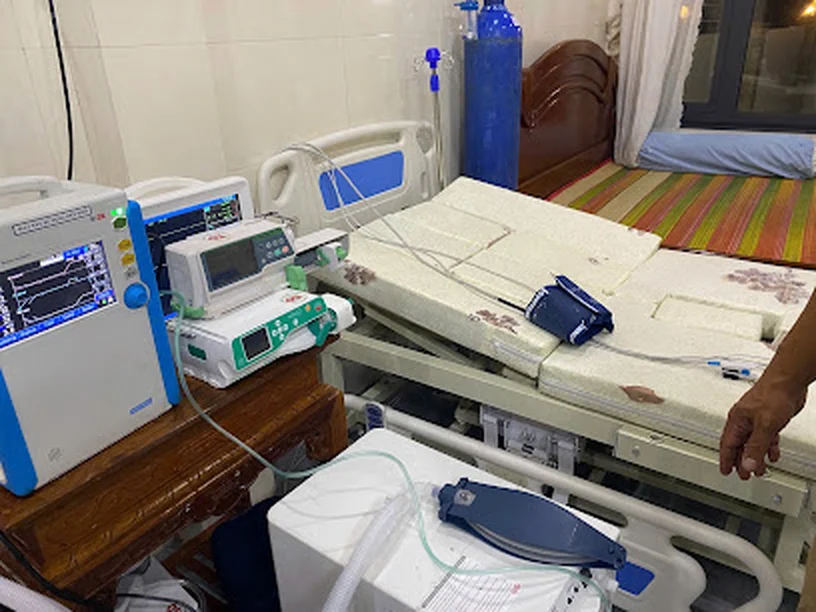
Hospitals in Hanoi as a foreign patient: which tier you land in, and the companion system nobody warns you about
How the public, city and private tiers differ in Hanoi, what a public ward actually expects from your family, the documents an insurer will ask for, and why the weeks after discharge are the part people fail to plan.
Treated in Dong Hoi: what a hospital stay is like near Phong Nha when you do not speak Vietnamese
Dong Hoi is the hospital city for Phong Nha, about 45 km away. What care there is actually like for a foreign patient, how the companion system works, and how to cover the weeks after discharge.
Caves and treks around Phong Nha: what actually goes wrong, and how far help is
The cave you book decides your risk. What goes wrong on boardwalk caves, water caves and multi-day expeditions around Phong Nha, which illnesses follow cave water and bat caves, and how long help really takes.
Admitted to a public hospital in Da Nang with nobody to sit with you
Da Nang's public hospitals are good and inexpensive, and they assume a family member stays at the bedside. Here is what that means if you are here alone, and how to fill the gap without moving to a private hospital.
Treated in Hue: what a public hospital stay is like when you do not speak Vietnamese
Hue Central Hospital is a long-standing national-level public hospital. Here is what care there is actually like for a foreigner, and how to fill the gap the ward assumes your family will fill.
Public hospitals in Ho Chi Minh City: what actually happens, and how to cope alone
Cho Ray, Tu Du, Binh Dan, Gia Dinh: what a Saigon public hospital stay is really like for a foreigner — admission, family care, paperwork, coping alone.

Traveller's Diarrhoea in Vietnam — What Actually Helps
Between 30% and 70% of travellers get it. Here is how to tell a bad day from a real problem, what to drink, and when a doctor should come to your room.

Sleeping Pills in Vietnam — Why You Still Need a Doctor
Can you buy sleeping tablets over the counter here? Is melatonin legal in Vietnam? What the rules are, what a pharmacy cannot check, and your options.
Rehabilitation at home: what to practise, for how long, and when you need a therapist
Home rehabilitation after a stroke, surgery or a long period in bed: exercises by stage, what the family's role is, and the mistakes that make practice counterproductive.
Blood tests at home: when it makes sense, how long to fast, and whether results stay accurate
Home blood sample collection: how long to fast, how samples are kept and transported, and which tests are better done at a medical facility than at home.
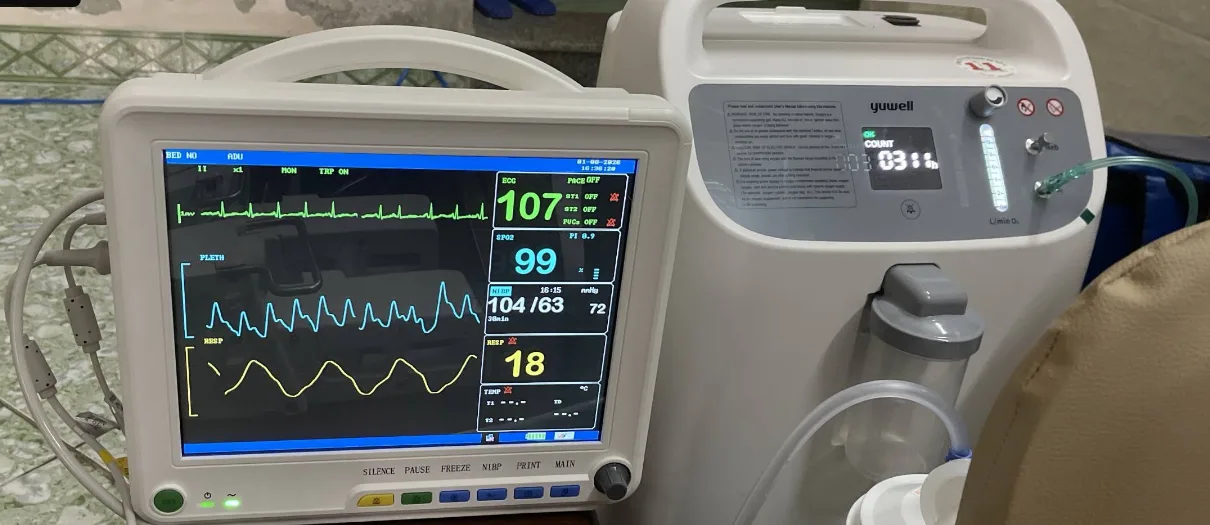
Renting medical equipment for home use in Ho Chi Minh City: ventilators, oxygen concentrators, hospital beds
Renting a ventilator, oxygen concentrator, hospital bed and monitors for home use in Ho Chi Minh City: rent or buy, preparing for discharge, and safety rules.
Food Poisoning in Vietnam: What to Do First and When You Need a Doctor
Vomiting, diarrhoea and stomach cramps while travelling in Vietnam: how to rehydrate, the warning signs that mean hospital now, and when an IV is needed.

Finding an English-Speaking Doctor in Ho Chi Minh City: Home Visits, Hotels and Insurance Paperwork
For expats and visitors in Ho Chi Minh City who need an English-speaking doctor: what your options are, when a home or hotel visit makes sense, the paperwork you need for a travel insurance claim, and how to avoid language errors during a consultation.

Elderly home care in Ho Chi Minh City: how to choose well
Hiring elderly home care in Ho Chi Minh City: helper versus nurse, assessing what the patient really needs, what to ask before hiring, and the risks to watch.
Home doctor visits in Ho Chi Minh City: when to call, how it works, and what it covers
Home doctor visits in Ho Chi Minh City: which cases suit them, which must go to hospital, what happens during a visit, how to get a quote, and how to prepare.
Sick in Da Nang? Hospital vs. Home Doctor — What to Do
Food poisoning, fever or dehydration in Da Nang: when a hospital is the right call, when a doctor can come to your room, and how to get an insurance receipt.
What Home Medical Care Costs — and How to Get a Quote
How home medical care is priced: what drives the fee for nursing care, ventilator care, wound dressing, IV therapy, home doctor visits, in-hospital care and equipment rental — and how to get an exact quote.
In-Hospital Care & Patient Sitting Service in Da Nang: A Solution for Busy Families
Hire a professional caregiver to sit with a hospitalised patient in Da Nang: what they do, hourly or 24-hour options, costs, and how to choose a trustworthy service for your family.
Home Doctor Visits in Da Nang: When You Need One, How It Works & Costs
When calling a doctor to your home in Da Nang makes more sense than a hospital trip, what happens during the visit, and how to get a quote beforehand.
Home IV Therapy, Injections & Medical Orders — Safe, Prescription-Based
IV drips, injections and blood draws at your hotel or home: when it is appropriate, why a prescription is needed, and how the nurse keeps it safe.
Home Wound Care & Dressing Changes — Preventing Infection
A guide to home wound care, dressing changes, and suture removal using correct sterile technique to prevent infection; warning signs that need a nurse, and service prices.
Home Care After a Stroke: A Family Guide
A guide to caring for a stroke survivor at home: preventing pressure sores, nutrition, motor rehabilitation, medication management, and when to hire a professional nurse.

Home Care for Ventilator-Dependent Patients: Procedures, Costs, and Safety
What caring for a ventilator-dependent patient at home involves: monitoring the ventilator, suctioning, airway management, infection prevention. Procedures, nursing fees, and ventilator rental.
Elderly Home Care: Hourly Nurse or 24-Hour Live-In Care?
Compare hourly and full-day elderly home care packages: when to choose each option, real costs, and how to find a reliable professional nurse for your family.
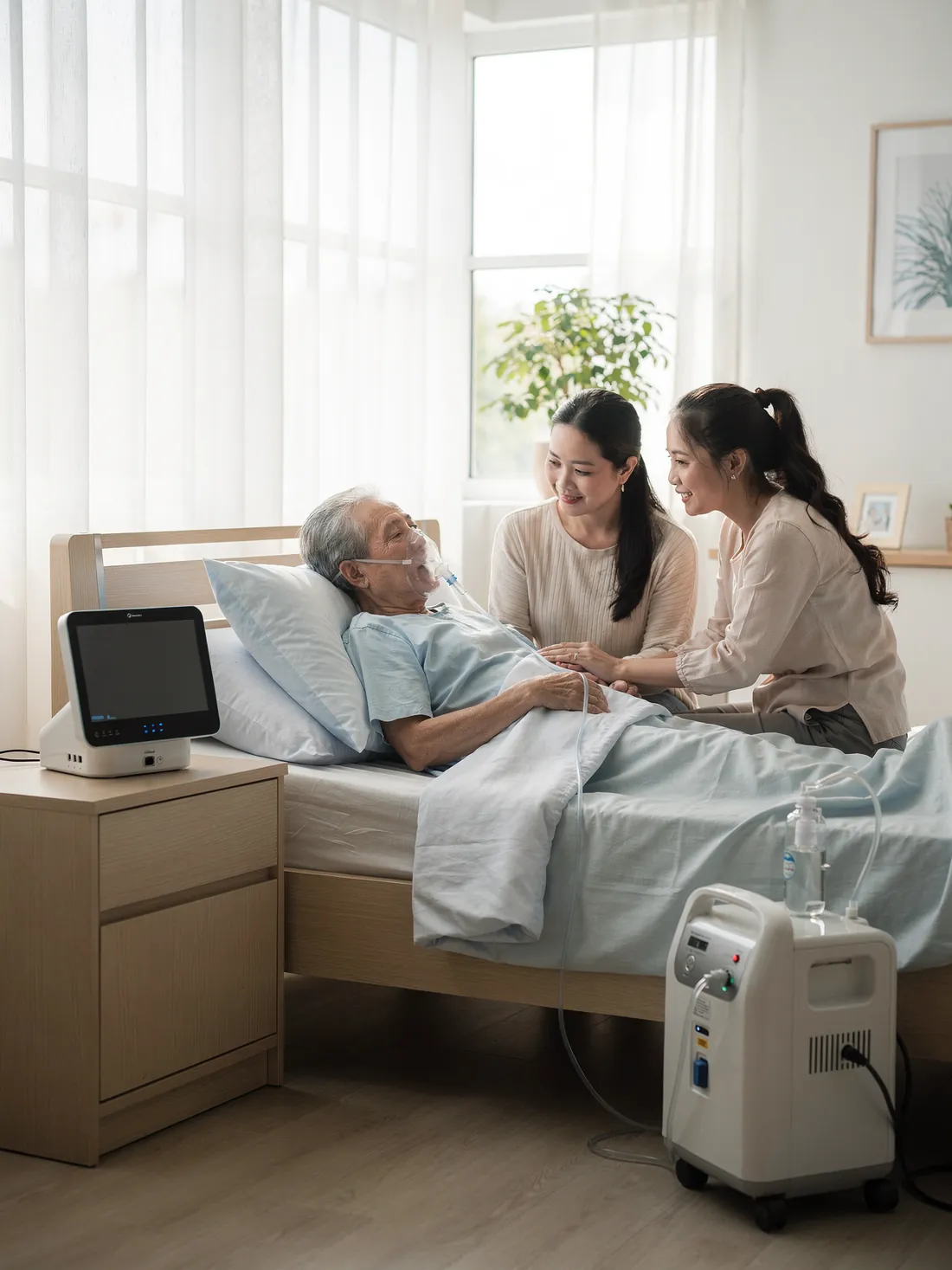
Renting an Oxygen Concentrator or Oxygen Cylinder at Home: Price Guide & How to Choose (2026)
How to rent a 5L/10L oxygen concentrator or oxygen cylinder for home use: what's the difference, which to choose, real rental prices, and safety tips for home oxygen therapy.
Need care for a loved one?
Leave your details — the on-duty staff call you back within 5 minutes. Your message goes straight to our 24/7 on-duty medical team.
Book now