
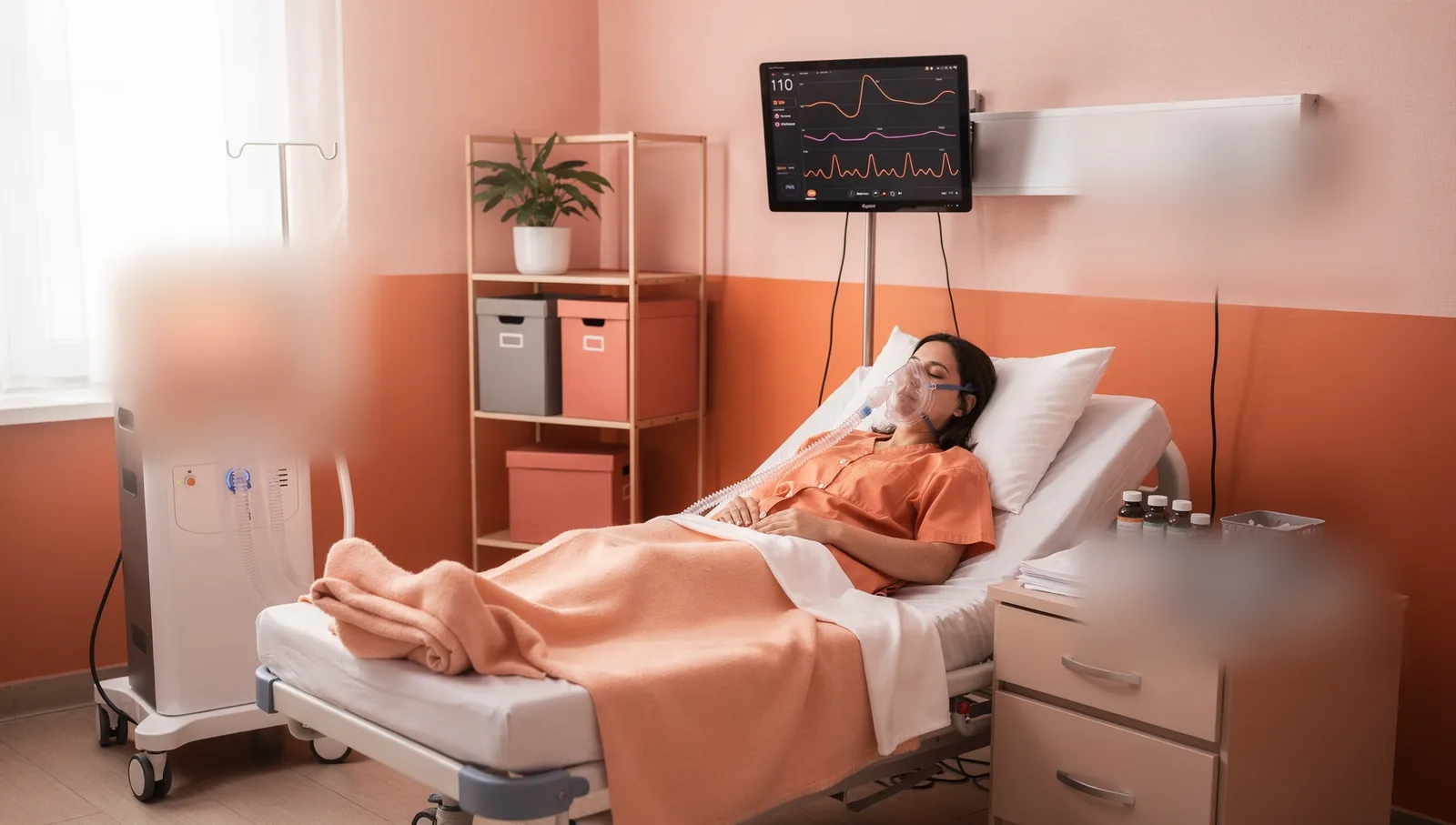
The most important thing first: if you suspect acute pancreatitis, go in; do not watch at home. The illness worsens by the hour, and people tend to do the opposite — take something for the stomach and wait the night out.
Recognising the pain of acute pancreatitis
The pain starts in the area above the navel — mid-abdomen, below the breastbone — and then bores straight through to the back. Unlike stomach pain, this pain is CONSTANT: it does not ease off and then gather into waves, it holds steady or builds.
The sign a family can see most clearly is POSTURE: the pain is worse lying flat on the back and easier sitting bent forward or curled on one side. If you see the person finding a hunched sitting position for themselves to get relief, read that as a sign of severity — do not take it to mean they are more comfortable.
- Vomiting a lot, but NO relief afterwards — with stomach pain and food poisoning, vomiting usually takes the edge off.
- The abdomen distended and tight, tender when pressed, and they do not want anybody touching it.
- Fever, a fast pulse, sweating, and a sense of being far more unwell than in any previous bout of abdominal pain.
- Yellow skin, yellow eyes or dark urine: this points towards a blocked bile duct and means going now.
- How bad the pain is does not tell you how serious this is — do not use it as the measure.
The situations this commonly follows in Vietnam
Pain of the kind described above, appearing after one of the following, makes acute pancreatitis more likely:
- After a drinking session — particularly drinking heavily over a short time, or drinking continuously for several days.
- After a meal heavy in fat, fatty meat or offal; the pain typically comes on within a few hours of that meal.
- Somebody already known to have gallstones, or with repeated bouts of pain in the right upper abdomen.
- Somebody with high blood fats, especially high triglycerides; somebody overweight or with diabetes.
- Somebody who has had pancreatitis once before: the risk of it recurring is high, and the next time can be worse.
Three things are commonly mistaken for it, and all three cause delay:
- Stomach pain: clearly related to meals, usually eased by a light meal or by a stomach remedy, does not bore through to the back, does not build.
- A gallstone attack: pain in the right upper abdomen spreading to the right shoulder, usually settling after a few hours. But gallstones are a leading cause of acute pancreatitis — if this attack lasts longer than any before it, be seen.
- A heart attack presenting in the abdomen in an older person: also pain above the navel, nausea, sweating. If there is breathlessness as well, or pain spreading to the shoulder, the left arm or the jaw: call 115 (the emergency number in Vietnam), do not drive them in yourself.
What to do now
- Arrange to get them to hospital now; call 115 if the pain is severe and the person is weak.
- Write down on paper: the TIME the pain started, where it is, whether it bores through to the back, how many bouts of vomiting there have been, the most recent meal or drinking session — exactly the questions the doctor asks first.
- Let the person sit leaning slightly forward; do not make them lie flat on their back.
- Take their temperature and note the time alongside it.
- Take a list of the medicines they are on, old medical records, and any abdominal ultrasound report or blood-fat results you have.
- Be straightforward with the doctor about alcohol, even if it is awkward: that fact decides how they proceed, and it is not a judgement.
What you must NOT do
- Do NOT give food, and do not push fluids while the pain is severe and they are vomiting — food makes the pancreas secrete more. But this is not an instruction to fast at home and wait for improvement: the body usually needs fluids through a drip, and that is precisely why this belongs in hospital.
- Do NOT allow one more sip of alcohol, not even «to warm them up».
- Do NOT take a stomach remedy and treat the matter as closed — the commonest mistake in this group of illnesses.
- Do NOT take a strong painkiller and wait the night out. Paracetamol (acetaminophen) and non-steroidal anti-inflammatory drugs such as ibuprofen or diclofenac do nothing about the cause, and they make it harder for the doctor to judge severity.
- Do NOT apply heat, warming plasters, vigorous oil rubbing, coin-rubbing, cupping or pricking over the abdomen and back.
- Do NOT use «liver-cooling, detox» remedies bought online: the contents are unknown, and some contain corticosteroids that mask the signs of deterioration.
When you must go to hospital
GO TO EMERGENCY CARE or call 115 NOW — do not wait for morning, do not wait to see whether it eases — if there is severe pain in the area above the navel boring through to the back, even with no other sign yet. All the more so if there is also: vomiting over and over with not a sip of water staying down; fever or shaking chills; a fast pulse, fast breathing, cold clammy skin; feeling faint or passing out on standing up; confusion, dullness, hard to rouse; yellow skin or yellow eyes; an abdomen hard as a board that they will not let anybody touch; many hours without passing urine, or very little urine; vomiting blood, or black stools. Drop your threshold for waiting much lower if the person is elderly, pregnant, or has diabetes, kidney disease, heart disease or liver disease, or is on medicines that suppress the immune system. — BE SEEN SOON, WITHIN THE NEXT ONE TO THREE DAYS, though this is not an emergency, if: you already know you have gallstones or high blood fats and you have just had mild pain in the area above the navel after a fatty meal, which has now gone; or you have just been discharged after a bout of pancreatitis and a mild dull ache has come back, with eating and drinking still manageable. Mild pain that keeps building does not wait for the appointment — go now.
With suspected acute pancreatitis there is no place for a home visit — go to hospital. Y Te Xanh helps with two other things: listening to your description over a video call so we can decide together whether to go in now or not yet, and once the person has been discharged, sending a nurse to the home to monitor them, support recovery and carry out the treating doctor's orders.
Per the US CDC, drinking too much alcohol — both heavy drinking on one occasion and heavy drinking over time — is a cause of pancreatitis, along with liver disease, cardiovascular disease and cancer; cutting down or stopping lowers the risk. This article passes on the recommendation of a public health authority and does not replace being examined. Citing CDC here does not imply that CDC endorses Y Te Xanh or our services.
Need personalised advice for your loved one? Call our hotline 094 368 81 15 (24/7) — calling to ask a question or to book costs nothing. GreenCare has doctors who come to examine, nurses who carry out doctor's orders (injections, infusions, dressing changes), remote consultation by video call, and a review of the medicines you are taking; an in-depth remote consultation, or any one after the first, is a paid service. For children we take examination and acute care only — not long-term care at home, and not newborns or expectant mothers. We confirm we have staff in your area and provide transparent pricing before we begin.
Sources
- MedlinePlus — Pancreatitis
- CDC — Alcohol Use and Your Health


